
Teaching and Care: 30 Years on the VA and UCSF Interventional Radiology Faculty
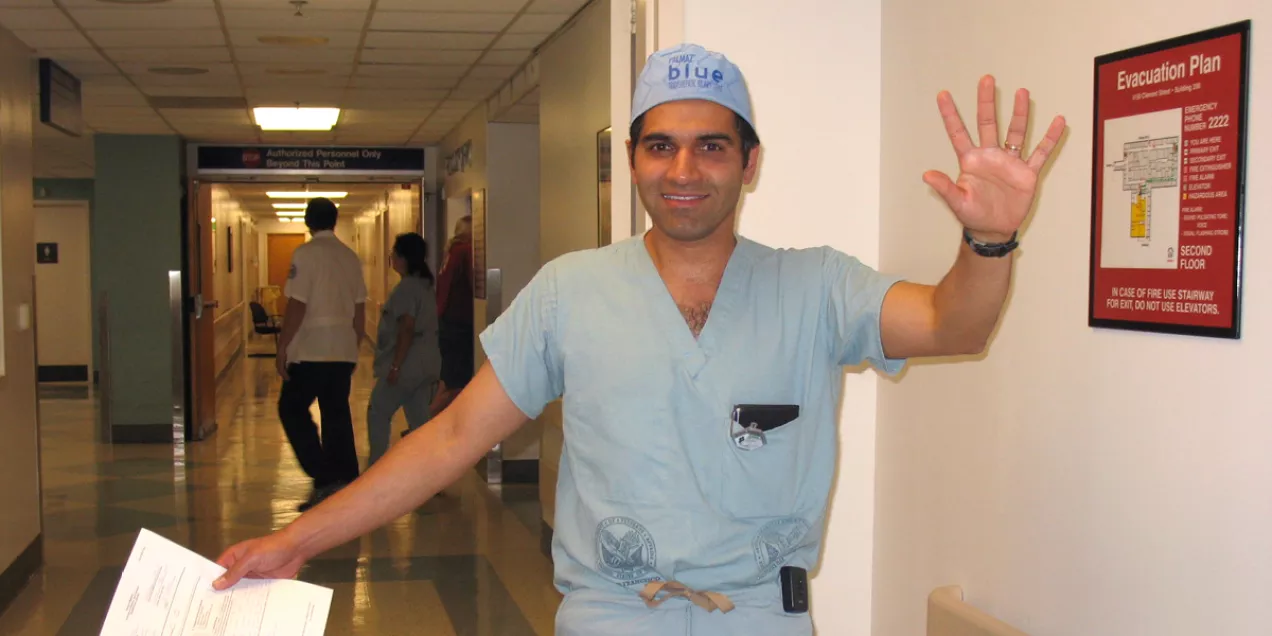
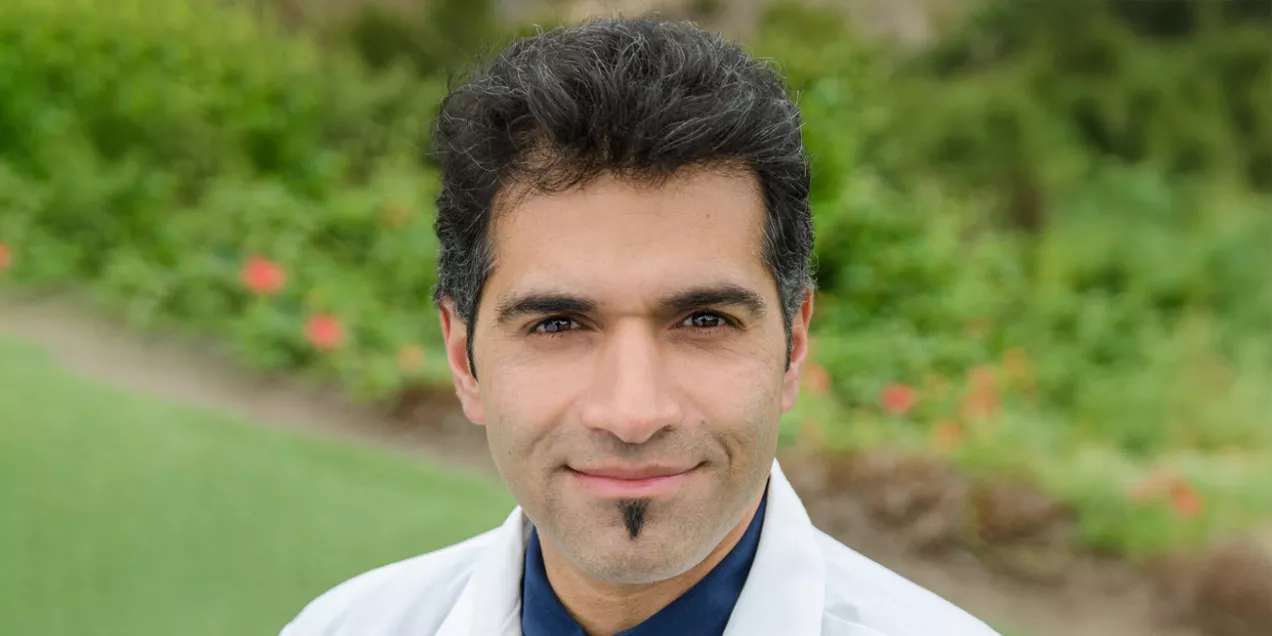
Rajiv Sawhney, MD, retired at the end of June from his position as clinical professor in the Department of Radiology and Biomedical Imaging at UCSF, and as Chief of Interventional Radiology at the San Francisco VA Medical Center. For thirty years of service, he made an impact here as a top-notch educator and accomplished clinician.
Sawhney has been invested in teaching since his time as a fellow. As his training ended and he considered entering private practice, he reflected on how much he had enjoyed teaching medical students and residents. That, and his interest in research, made him decide to give academic medicine a chance. At UCSF Sawhney benefited from his own mentors, learning interventional radiology under the wing of Susan Wall, MD. Robert Kerlan, MD, Ernest Ring, MD, Jeanne LaBerge, MD, and Roy Gordon MD, were helpful guides and mentors as Sawhney established himself as an interventionist.
Dr. Sawhney provided the quintessential introduction to interventional radiology through the VA practice — calm, cool, and collected, using your head before using your hands. He has been an anchor for our resident training and will be sorely missed.
Christopher Hess, MD, PhD
Raj Sawhney is a really good doctor. He has been exceptional regarding teaching interventional radiology to numerous residents.
Susan Wall, MD
For three decades at the VA, Sawhney has served as the primary instructor for UCSF radiology residents on their first month-long rotation in interventional radiology. The VA provides a setting to get acclimated with basic cases, usually with a timeline that allows for thorough patient screening and a methodical practice. Sawhney observes that the VA provides the residents with a secure environment to learn the basics of interventional radiology and a team experience before they move on to more complicated cases at Zuckerberg San Francisco General and its more urgent pace.
Sawhney says that radiology residents are an enduring high point of the job, “We have the best post-grad program in radiology in the country. They’re brilliant people who are down to earth and easy to work with. It’s a joy to interact with them every day and teach the basics.”
Pallav Kolli, MD, Chief of Interventional Radiology at UCSF, said, “Raj was my first IR teacher. With extreme patience, he taught me the very basic skill of accessing a blood vessel under ultrasound guidance all the way to more advanced procedures like catheterizing the tertiary arteries in the liver. More importantly, he taught me how to care for patients holistically and how to be a patient-centered and compassionate interventional radiologists.”
Vishal Kumar, MD, also values Sawhney as an important mentor. “Dr. Raj Sawhney has been a friend, partner, and mentor ever since I have been a part of the UCSF radiology community. In addition to possessing all the ideal qualities of an incredible interventional radiologist, he's one of the coolest, calmest individuals I've ever met. I couldn't imagine a better role model for residents to work with their first time in IR. Thank you for supporting me throughout my career and being such an integral part of UCSF history.”
Clinical work has been the core of Sawhney’s passion. He considers himself lucky: interventional radiology was early in its development in the mid-1990s, right when stent grafts were developed for treating abdominal aneurysms. Working closely with vascular surgeon Timothy Chuter, MD, Sawhney provided an interventional radiologist’s expertise using guide wires, catheters, and stents for this lifesaving procedure.
Throughout his career he has appreciated collegial relationships with collaborators in vascular surgery, cardiology, and oncology.
“You either don’t get along and nobody benefits, or you can join forces,” says Sawhney, summarizing his philosophy on collaboration.
Sawhney especially values the always new and changing nature of his work at the VA and at UCSF. In the start-up friendly culture of the Bay Area, with many medical device companies, Sawhney had the opportunity to participate in several early trials resulting in new procedures for interventional radiology practice, helping patients avoid surgery and see improvement in their health.
In a way, Sawhney finds the Bay to be like interventional radiology itself. “The field is constantly changing and constantly evolving. You constantly see new ways to do things, ways that are more minimally invasive, fewer complications, and with less recovery time. This field is never stagnant; every few months something comes along. You can either sit on the periphery and watch it develop, or you can get on the cutting edge.”
Keeping his eye on the future sometimes prompts reflection. He may not miss wearing heavy lead aprons for procedures, but as Sawhney neared his retirement date, he began to rethink his initial plan to permanently leave the IR suites and walk out into the sunset. He thought back to his own training and to the faculty mentors he encountered; giants of their fields walking the halls with the next generation of doctors imparting wisdom and the lessons of years of clinical experience. The grand vanishing act will wait, as Sawhney has decided to return as recall faculty, working a few days here and there to satisfy his need to continue teaching and helping patients.
But that still will allow for much more free time, and Sawhney intends to take advantage of that. He will be traveling to England, Scotland, France, and the Netherlands, and spending time with his two children just as his youngest wrapped up the first year of college. Restaurants and concerts will be a big part of that downtime. So if you are around the Bay Area at a little town square performance or a big progressive rock concert (his favorite musical genre), and you see a man ready to show you how it’s done, maybe you can say hello to Dr. Sawhney.
Raj was not just my first IR teacher. For decades he has been every UCSF radiology resident’s first IR teacher. Only an extraordinary person such as Dr. Sawhney could simultaneously provide world-class care to our veterans, take on the challenge of training a new novice every single month, and inspire a number of these novices to follow his career path into interventional radiology. He has distinguished himself as a physician, an educator, a colleague, and a mentor to dozens of interventional radiologists who now practice across the U.S.
Pallav Kolli, MD
I have known Dr. Sawhney for 30 years. Never once did I have a bad day working with Dr. Sawhney. I was his go-to-gal, so to speak. It was always a pleasure to come to work and see his smiling face. I wish him only the best in this new chapter.
Linda Winkler