
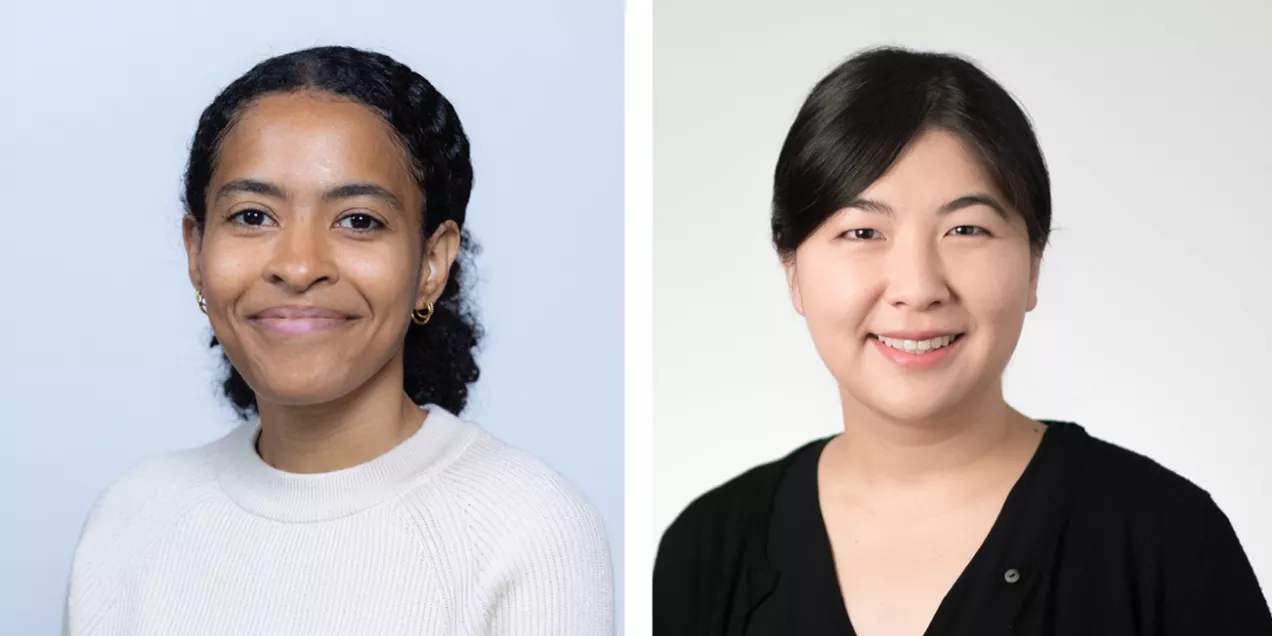
Global radiology partnerships with low- and middle-income countries can improve access to radiology workforce and technology and address the critical shortage of imaging care worldwide, report Lydia Kwarteng, MD, lead author and UCSF radiology resident, Amie Lee, MD, her faculty mentor, and a research team from Tanzania and the U.S.
In Global radiology: Building equitable and effective partnerships with low and middle-income countries, the authors suggest that equitable alliances can avoid perpetuating power imbalances by focusing on local capacity-building, leadership development, research priorities based on needs assessment, and shared decision-making.
Older global radiology partnerships have often relied on short-term medical trips that don't address systemic issues. These models risk creating dependency on High Income Countries (HICs) as well as undermining local health systems. Despite good motivations, global radiology has systemic obstacles that place most funding, leadership, and research activity in HICs instead of within Low- and Middle-Income Countries (LMICs). For example, the largest tuberculosis research funder gave 93% of its budget to U.S.-based institutions, even though 98% of TB cases occur in LMICs. Publications often have low representation of local authors, and paywalls limit access for researchers in LMICs.
Equitable and effective global radiology in action
The authors highlight five case examples of equitable and effective global radiology partnerships operating in Tanzania and Nigeria.
Road2IRL
Accountable Leadership
Road2IR focuses on sustainable, local interventional radiology (IR) training programs in LMICs, like the two-year program at Muhimbili National Hospital in Tanzania, which graduated 13 IR physicians between 2019 and 2023. With equitable leadership, forming a framework of local oversight and accountability with local stakeholders, the curriculum meets local needs and centers decision-making power in local institutions.
RAD-AID International
Assessment Tool for Planning and Implementation
RAD-AID International assesses local priorities using a World Health Organization-endorsed Radiology Readiness Assessment tool that ensures work is driven by local interdisciplinary teams and meets community-specific needs. This approach has led to sustainable collaborations with meaningful impact in over 40 countries.
Muhimbili University of Health and Allied Sciences (MUHAS) – Ocean Road Cancer Institute (ORCI) – UCSF Cancer Collaboration
Equitable Research
The MUHAS-ORCI-UCSF Cancer Collaboration prioritizes building research capacity and leadership for clinician-scientists in Tanzania, ensuring that studies address local priorities. Through the Cancer Research Training Program in Tanzania, researchers receive mentorship in conceptualizing, implementing, and obtaining funding for original cancer-focused research. The program has produced peer-reviewed publications and direct grant awards to Tanzanian investigators.
African Research Group for Oncology (ARGO) – Obafemi Awolowo University (OAU) – Memorial Sloan Kettering Cancer Center (MSKCC) Global Cancer Disparities Initiatives (GCDI) Program
Collaborative Research Training
GCDI supports collaborative cancer research led by Nigerian investigators in an integrated, multidisciplinary program. Nigerian researchers lead oncology research efforts, strengthen local research capacity, and develop long-term partnerships. Twelve researchers, including radiologists, join the program annually and are paired with mentors in both Nigeria and North America.
RSNA Global Learning Center
Centering Resources in LMICs
The RSNA Global Learning Center directly funds LMIC initiatives such as the Neuroradiology and Women's Imaging Fellowships in Tanzania, and invests in critical local infrastructure and training resources. They installed fiber optic internet at Muhimbili National Hospital and facilitated the purchase of clinical and training equipment, enabling long-term collaborations in education and research.
Lydia Kwarteng got involved in this topic because it felt personal, “I grew up in an LMIC, and I’ve witnessed how transformative global health partnerships can be when they are equitable. With global health confronting its role in perpetuating inequities—and as radiology becomes increasingly active in this space—it felt like the right moment to highlight how global radiology can model more just and effective approaches.”
Read Global radiology: Building equitable and effective partnerships with low and middle-income countries in Clinical Imaging.