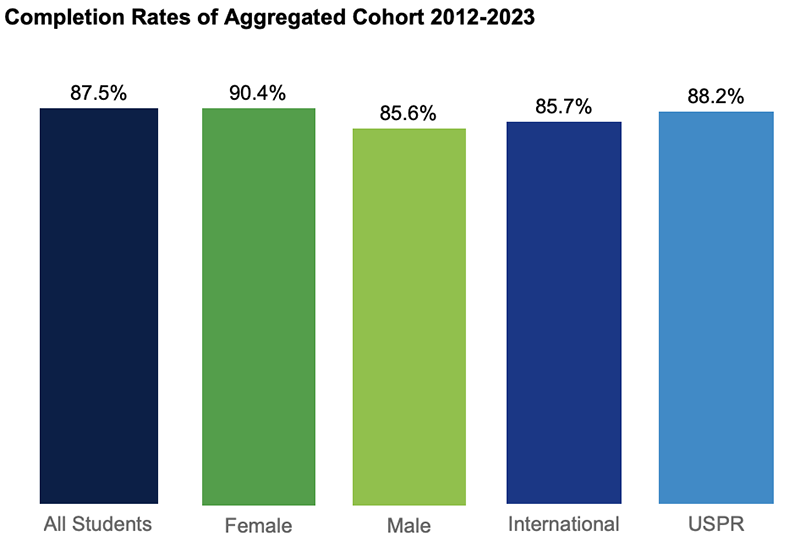
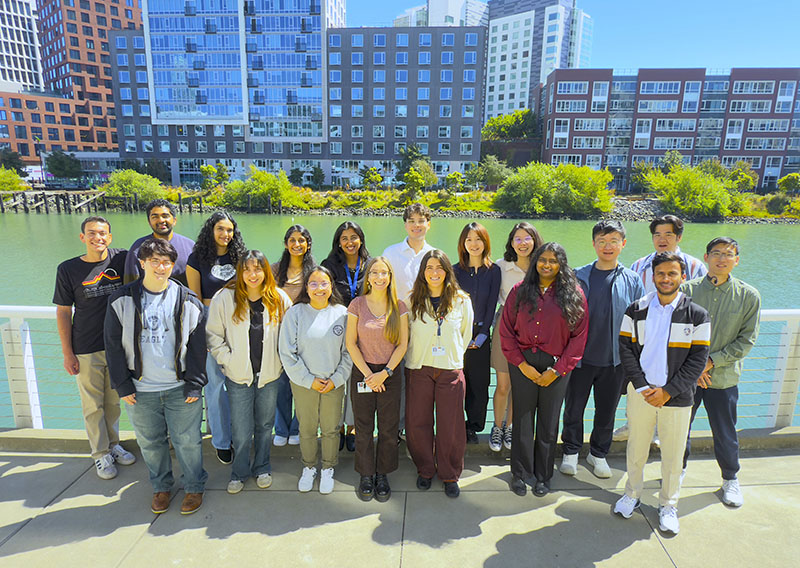
MSBI: Hands-On Imaging Education Program
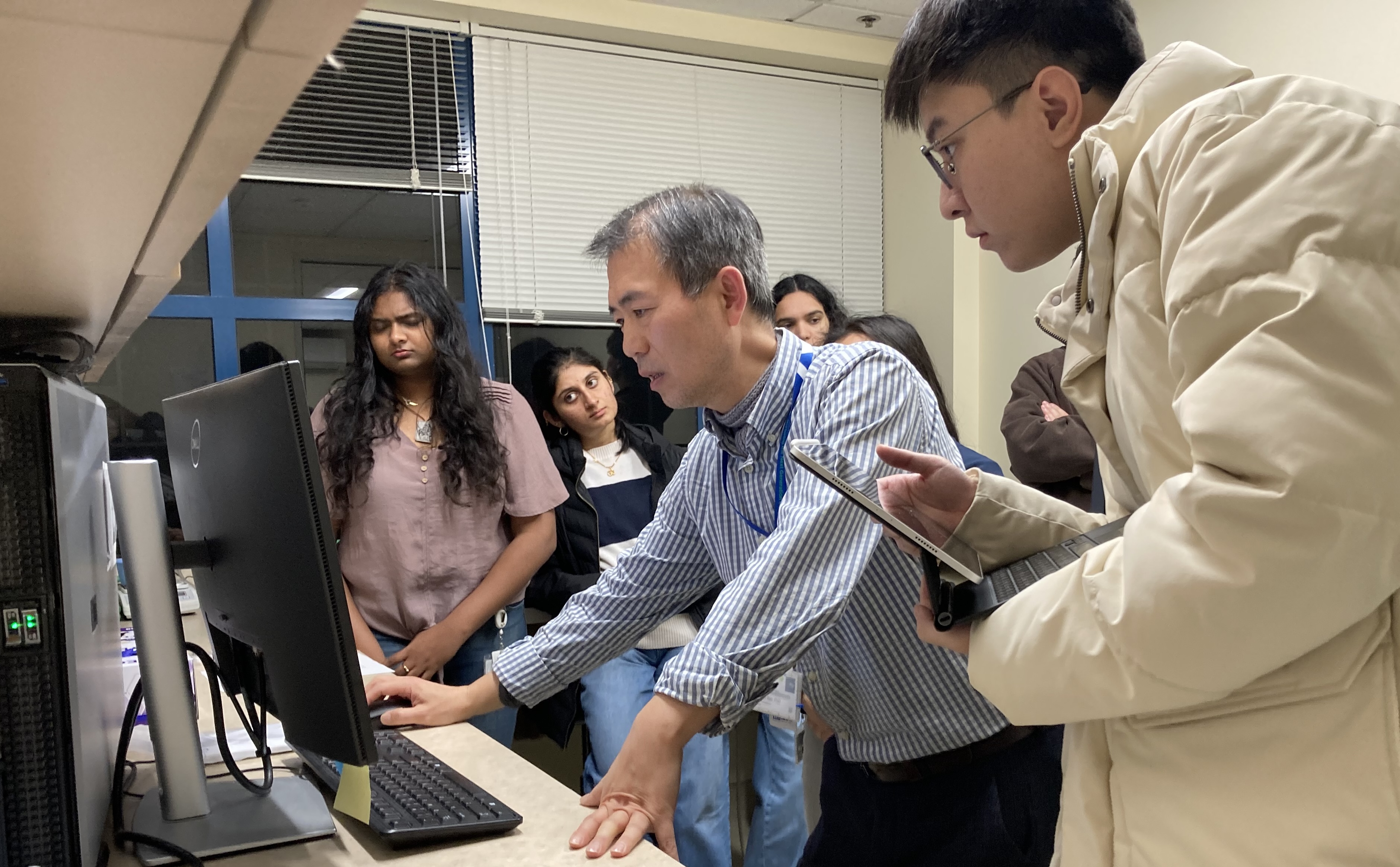
The Master of Science in Biomedical Imaging (MSBI) program is a distinctive one-year degree with a strong research component intended for students with bachelor's degrees who wish to master biomedical imaging fundamentals and research methods before professional (e.g., medical, dental) or PhD programs.
The program accepts 15 to 20 students each year, approximately half come from life sciences backgrounds, while the other half come from engineering, computer science, or physical sciences backgrounds.
Unique, Hands-On Opportunities and an Optional Thesis
 Thirteen dedicated faculty teach in the MSBI program. This allows enrollees to work with world-class teachers for each imaging modality. Each quarter, guest lecturers from our department and other UCSF departments give invited talks and share expertise in the core and elective courses.
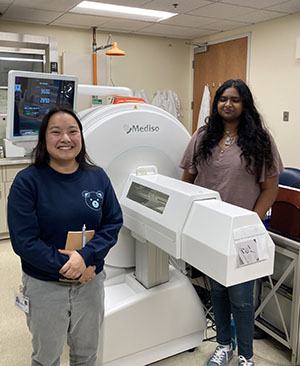
Courses include hands-on utilization of imaging equipment in addition to lecture-based learning. For example, students learning the principles of MR imaging perform exercises in the classroom with a tabletop MRI unit, demonstrating the principles as they are introduced before they move on to experiencing the clinical MRI scanner.
Students have the option to conduct research mentored by world-class faculty in topics that cover every modality and include subjects such as PET probes & theranostics, wet-lab science that includes making contrast agents and radiopharmaceuticals, translational & clinical imaging, computational modeling, and AI for medical imaging.
Students who choose to supplement their degree with the optional research-focused thesis present their findings during the MSBI Thesis Symposium each August.
MSBI Program Duration
- Full-time, 1 year (12 months) including a thesis option, or
- Part-time over 2-3 years
Program Leadership
Youngho Seo, PhD, an expert in research imaging theranostics and SPECT/CT, is MSBI program director, a leadership role he assumed in 2024 after teaching in the program for a decade.
Susan Noworolski, PhD, the MSBI Director of Graduate Studies, also guides the students’ progress. “The small program size of MSBI is a strength, providing students with a lot of interaction with our faculty and administration. Additionally, there are numerous, varied opportunities for research which many of our students pursue, advancing the imaging field.”
Graduate Outcomes
| Graduating Classes 2019-2023 | Percentage |
|---|---|
| Academia | 60% (38) |
| Pursuing Professional Degree | 55% (21) |
| Healthcare Provider | 2.6% (1) |
| Research Staff | 36.8% (14) |
| Other | 5.3% (2) |
| For Profit | 17.5% (11) |
| Government or Nonprofit | 7.9% (5) |
| Other | 14.3% (9) |