Recent Imaging Findings in Bipolar Disorder and Brain Changes Associated with Mood
Date
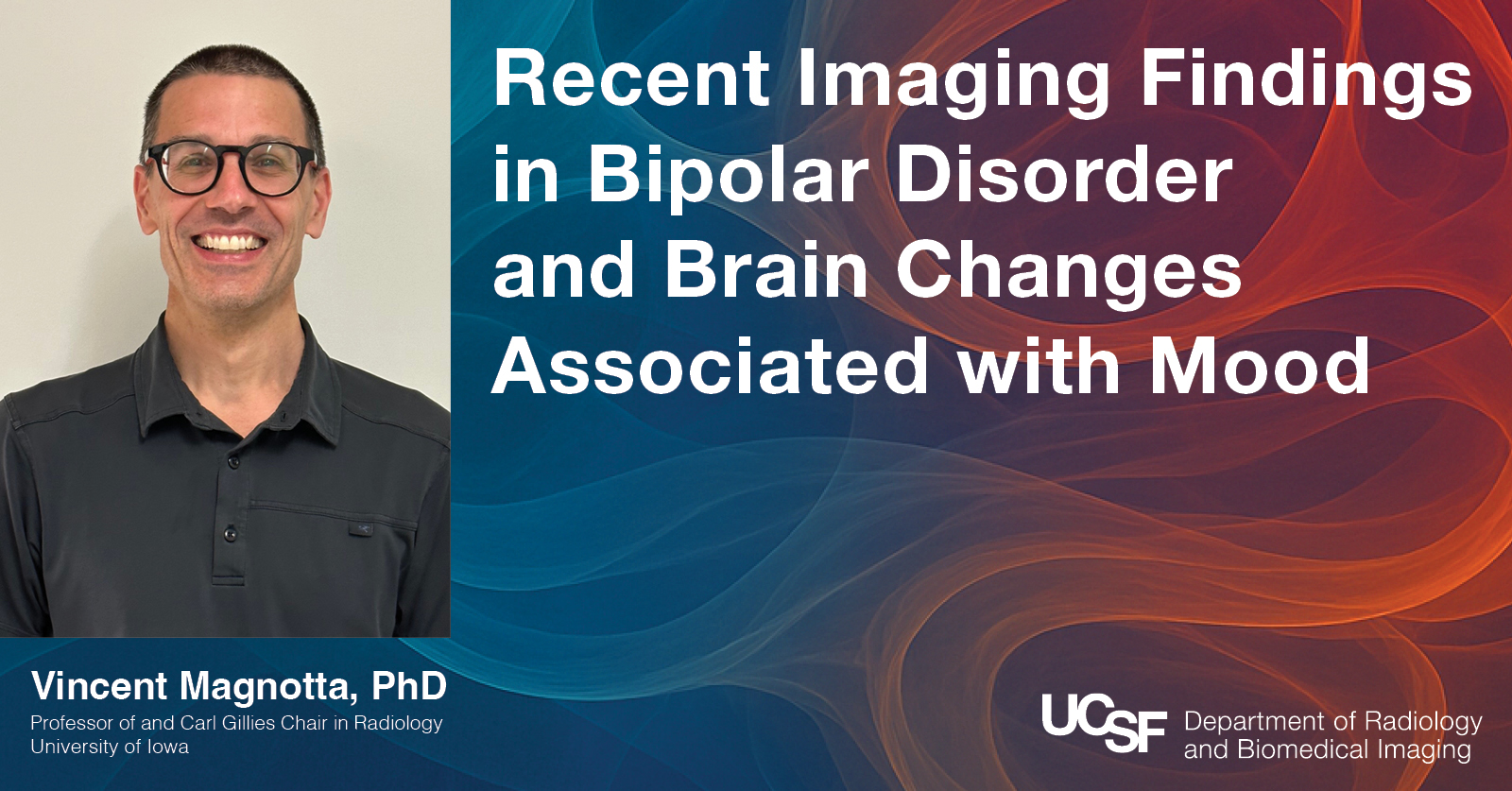
Dr. Magnotta, Professor and Carl Gillies Chair in Radiology at the Division of Neuroradiology, The University of Iowa, will discuss recent anatomical, functional, and metabolic changes observed in bipolar disorder. Additionally, the study includes participants with significant mania and depression ratings, enabling us to explore the relationship between brain function, metabolism, and mood. They are now conducting a longitudinal study of bipolar disorder with weekly mood assessments, enabling the investigation of mood fluctuations within individuals.
This talk will focus on recent anatomical, functional and metabolic changes that we have observed in bipolar disorder. Furthermore the study includes participants with significant mania and depression ratings allowing us to explore the relationship of the brain function and metabolism with mood. Currently we are undertaking a longitudinal study of bipolar disorder with weekly mood tracking allowing us to explore mood variations within a participant.
4676 America/Los_Angeles public
Type
Time Duration
Location
Notes
ID: 947 8304 0356
Passcode: 809039
Dr. Magnotta, Professor and Carl Gillies Chair in Radiology at the Division of Neuroradiology, The University of Iowa, will discuss recent anatomical, functional, and metabolic changes observed in bipolar disorder. Additionally, the study includes participants with significant mania and depression ratings, enabling us to explore the relationship between brain function, metabolism, and mood. They are now conducting a longitudinal study of bipolar disorder with weekly mood assessments, enabling the investigation of mood fluctuations within individuals.
This talk will focus on recent anatomical, functional and metabolic changes that we have observed in bipolar disorder. Furthermore the study includes participants with significant mania and depression ratings allowing us to explore the relationship of the brain function and metabolism with mood. Currently we are undertaking a longitudinal study of bipolar disorder with weekly mood tracking allowing us to explore mood variations within a participant.
Speakers