
Advancing Microstructure Imaging with High-Gradient Strength MRI and Machine Learning
Date
Type
Time Duration
Location
Speakers
Microstructure imaging holds great promise for neuroscience and clinical research but remains challenged by long acquisition and computation times, as well as biases and degeneracies in parameter estimation. In this talk, I will present our works to address these challenges through machine learning and high-gradient strength MRI. First, I will introduce how patch-based convolutional neural networks can accelerate data acquisition and improve the estimation of fiber orientation and microstructural properties. Next, I will discuss combined diffusion-relaxometry approaches which enable more specific quantification of brain tissue microstructure and composition. I will introduce Microstructure.jl, an open-source toolbox developed in Julia, which provides a unified framework for parameter estimation and uncertainty quantification across various biophysical models. Finally, I will present histological validations of advanced microstructure measures and highlight applications of these techniques in capturing dynamic microstructural changes during brain development, thereby enhancing our understanding of the developing brain.
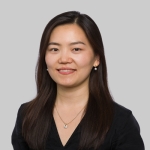
Dr. Ting Gong is a research fellow at the Athinoula A. Martinos Center for Biomedical Imaging at Massachusetts General Hospital and Harvard Medical School. She received her Ph.D. in Biomedical Engineering from Zhejiang University, China, and postdoctoral training at University College London and the Martinos Center. She is the recipient of a K99/R00 Pathway to Independence Award from the National Institute of Biomedical Imaging and Bioengineering (NIBIB), supporting her work on developing advanced microstructure imaging methods to study adolescent brain development.