
Forum for Advanced Imaging Research: "Impact of HIV Infection and Treatment on the Musculoskeletal System"
Lunch provided on a first come, first served basis.
Connect via Zoom at: https://zoom.us/j/9055865224
Broadcasts to:
- China Basin, 185 Berry Street NW, Suite 350, Lobby 6 (Large Classroom)
- Mission Bay Hospital, 1975 4th Street, C1719
- VAMC Bldg 200 Room 2A-147
- ZSFG, Radiology, Minagi Library
2021 America/Los_Angeles public
Lunch provided on a first come, first served basis.
Connect via Zoom at: https://zoom.us/j/9055865224
Broadcasts to:
- China Basin, 185 Berry Street NW, Suite 350, Lobby 6 (Large Classroom)
- Mission Bay Hospital, 1975 4th Street, C1719
- VAMC Bldg 200 Room 2A-147
- ZSFG, Radiology, Minagi Library
"MSK Imaging Findings in HIV"
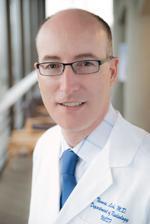
Thomas M. Link, MD, PhD, is Chief of the Musculoskeletal Imaging Section and Clinical Director of the Musculoskeletal and Quantitative Imaging Research (MQIR) Group in the Department of Radiology and Biomedical Imaging at the University of California, San Francisco. Dr. Link completed his medical residency in Muenster, Germany. He performed a research fellowship at the University of California, San Francisco in 1996 and was a Visiting Associate Professor at UCSF from 1999-2001. Before joining the Department of Radiology and Biomedical Imaging in 2003 he was a Vice-Chair of the Department of Radiology at the Technical University of Munich.
As Clinical Director of the Musculoskeletal and Quantitative Imaging Research (MQIR) Group, Dr. Link’s main interest is translational research. He wants to provide clinical background to basic science researchers, assessing clinical feasibility of research projects and to apply new imaging techniques in clinical studies.
Dr. Link's research program in MQIR has three main focuses: imaging of osteoporosis, particularly developing new imaging techniques for assessment of bone quality and density, application on new imaging techniques for the clinical assessment of osteoarthritis, cartilage and prevention of cartilage degeneration, and interventional techniques for diagnosis and treatment of bone tumors. Dr. Link has published extensively with more than 400 peer-reviewed articles, 48 review articles, 47 book chapters and 3 books.Dr. Link has published extensively with more than 400 peer-reviewed articles, 48 review articles, 47 book chapters, and 3 books.

"Bone, Marrow, and Body Composition in HIV"
Roland Krug, PhD, is an Associate Professor in the Radiology Department with a joint appointment in Orthopedic Surgery at UCSF. Dr. Krug’s research interests include technical development of Magnetic Resonance Imaging and Spectroscopy methods and advanced digital imaging processing algorithms. His clinical focus includes the early assessement of musculoskeletal degenerations in particular related to osteoporosis and osteoarthritis. More recently, he expanded his interest to the diagnosis and treatment of lower back pain using MRI methods such as MR guided Focused Ultrasound (MRgFUS).
As a principal investigator, Dr. Krug has received substantial support from NIH including two R01 grants. Dr. Krug has more than 50 peer-reviewed articles published in the highest ranking journals in the field and serves as a reviewer for more than 15 scientific journals. He also teaches a class on MR pulse programming in the departmental master program.

"Clinical Perspective and Leveraging Multi-Center Clinical Studies To Answer Questions Related to the Bone"
Since joining the faculty at UCSF in 2000, she has been engaged in clinical translational research of chronic viral infections, specifically HIV and HCV, and their metabolic and inflammatory consequences on long term organ injury (e.g. liver, bone and vascular injury). As part of this work, she also studies novel non-invasive techniques to estimate steatosis and fibrosis using magnetic resonance (MR) imaging and ultrasound-based transient elastography as well as novel CT and MR imaging methods to measure bone and vascular injury. She is the Principal Investigator of an NIH funded R01 study to investigate the link between visceral adiposity, HIV, and HCV to the pathogenesis of hepatic steatosis and fibrosis and an NIH funded K24 award to mentor early career investigators to examine the effects of HIV/HCV coinfection on liver, bone and vascular injury. She is also one of three Principal Investigators of the Northern California site of the Women's Interagency HIV Study (WIHS), which is the largest and longest running prospective cohort of the progression of HIV infection in women in the US.
She serves as the Chair of the WIHS Executive Committee, Chair of the NIH AIDS Clinical Epidemiology Study Section and is a member of the Department of Health and Human Services Antiretroviral Therapy Guidelines Panel for Adults and Adolescents and the national VA HCV treatment recommendations panel.