
Translating the Image into Understanding
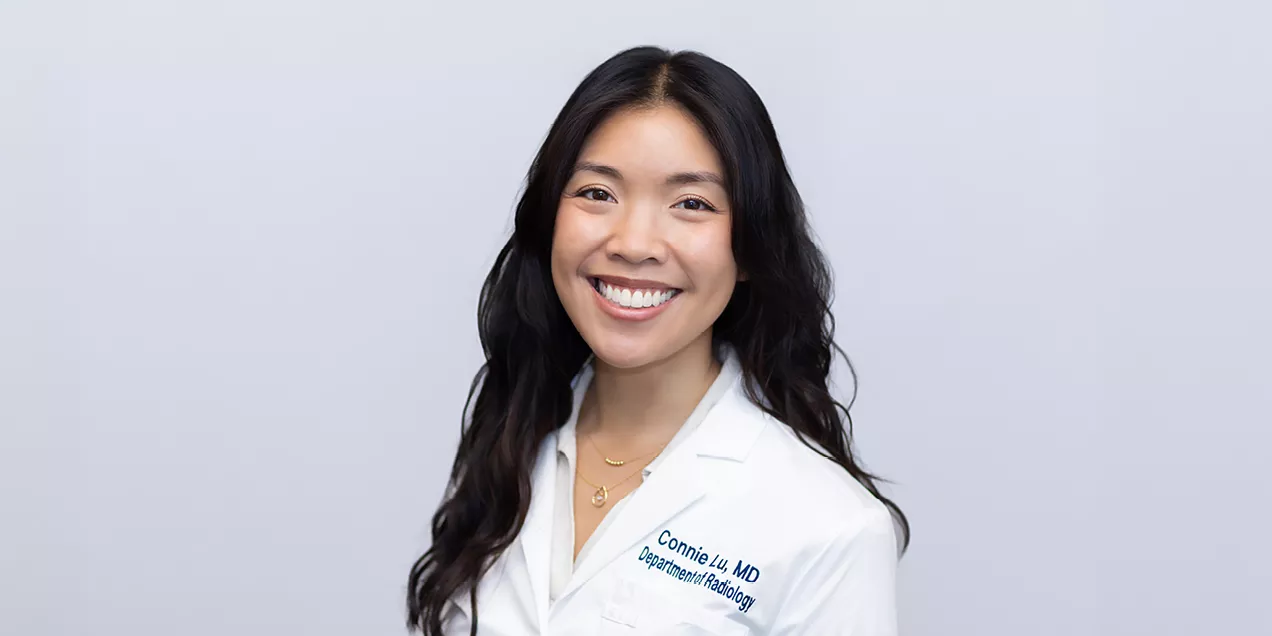
An art teacher’s advice led Connie Lu, MD, to enter medicine. The visual skills she developed through portraiture remain central to how she practices breast imaging: looking closely, interpreting what she sees, and deciding how best to communicate with the individual.
Lu once assumed that because she was a strong STEM student, she would one day go into engineering like many members of her extended family. But a high school visual arts class changed her trajectory. Her art teacher was the first person to present the possibility that Lu could be a doctor. The suggestion opened a door. Lu realized medicine could combine her interests in science and hands-on work with the opportunity to care directly for people.
As she entered medical school, plastic surgery initially appealed to the same appreciation for form and detail that drew her to sketching and portraiture.However, during her rotations, she met radiologists who introduced her to a field that could engage both her artistic eye and her attention to detail. One that sparked her a curiosity to understand the complex healthcare system.
Lu chose to specialize in breast imaging because it provided many opportunities for close patient interaction. She appreciates the dynamism that pulls her out of the reading room and allows her to meet patients face-to-face.
We can help our patients navigate the unknown of what comes next, whether it is a recommended biopsy or a follow-up. Every patient responds differently, and I value being able to help them feel supported.
Seeing Barriers to Care
Lu’s mentor during her residency at Weill Cornell, Geraldine McGinty, MD, MBA showed Lu how the specialty can be a lens into healthcare economics. That mentorship nurtured her interest in health equity and has shaped how Lu sees her role as a radiologist. She participated in the American College of Radiology’s Rutherford-Lavanty Fellowship in Government Relations and spent a week in Washington, D.C., learning how radiology advocacy works. This experience required a specific communication skill: translating complicated policy issues into terms that legislators and their staff could readily understand.
As a breast imaging specialist, Lu sees how barriers to screening can intersect with patients’ hesitation to engage with the healthcare system. Her breast imaging fellowship experience at Zuckerberg San Francisco General Hospital (ZSFG) deepened her understanding of the barriers patients can face and how radiologists can respond to them, observing that “I grew up having access to healthcare. I was able to go to the pediatrician every year, but that's not everyone's reality. There are a lot of barriers to being able to do that.”
At ZSFG, Lu sometimes found that language she had used successfully with patients in other settings did not translate as readily, particularly when working through an interpreter.
“The wording you use while talking to patients must translate to what best helps the patient understand,” she says. "There’s nuance in how I speak to patients and their responses help me change my communication style on the spot.”
The Words to Match the Picture
For Lu, good teaching and patient care begin in much the same place: creating enough trust for patients and trainees to voice what they think and ask what they need to know. “A good doctor needs to exhibit patience and kindness,” Lu said. “With both trainees and patients, you need to give them time to take in the information and figure out if they have any questions. Every question is valid.”
Since joining UCSF as a faculty member in the fall of 2025, Lu has enjoyed the transition from trainee to educator. She hopes to emulate her own teachers by meeting trainees where they are and turning individual cases into opportunities to learn.
“I try to provide an environment where trainees feel free to speak their minds. It’s easy to tell them what I’m thinking, but I want to give them time to think through a case themselves.” she says. Her goal is to strengthen trainees’ critical reasoning while they have the safety net of an attending.
Lu brings the same patience to conversations with anxious patients. She knows that her reports become part of an ongoing conversation among the clinicians caring for a patient. A finding that remains stable, for example, may be reassuring in one clinical context but significant in another if treatment was expected to reduce it. “You have to communicate both your findings and the reasoning behind your expectations.”
A Curious Eye
Lu's curiosity follows her outside the reading room. “When people ask, ‘What do you like about San Francisco?’ I say, ‘The public library system is amazing!’” An avid patron of the San Francisco Public Library, she reads widely and gathers the eclectic knowledge that she and her husband put to use at local trivia nights.
Her recent reading includes Who Is Government?, a collection edited by Michael Lewis about public servants whose work often goes unnoticed, a subject that resonates with her interest in how large systems affect people's lives. She still feels the pull of her sketchbook, too.
In breast imaging, Lu's curiosity and habits of close observation have found a larger purpose. Her work asks her to look closely at an image without losing sight of the person behind it or the healthcare system surrounding them.
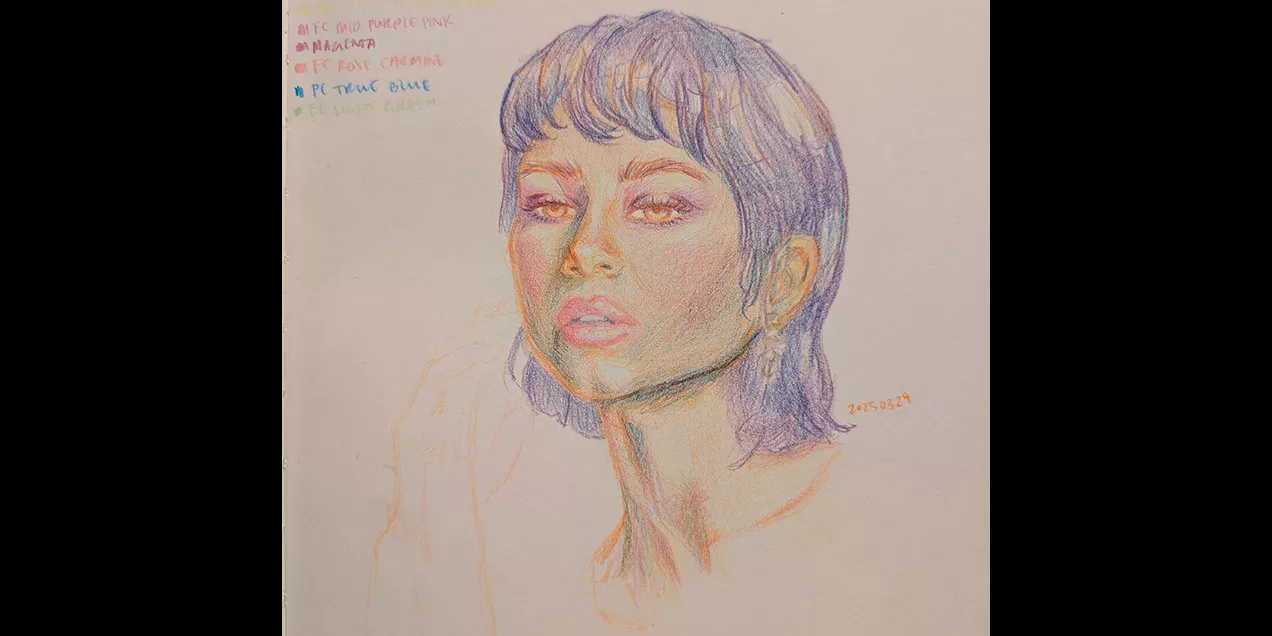
Illustration by Connie Lu
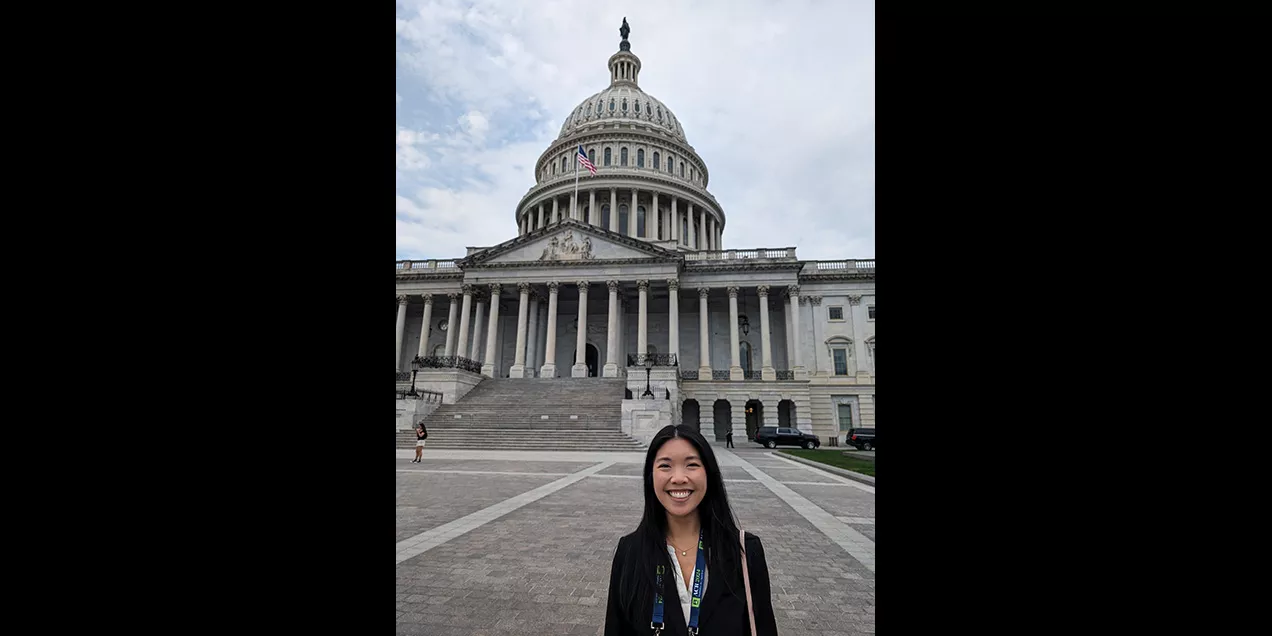
Connie Lu in Washington D.C.
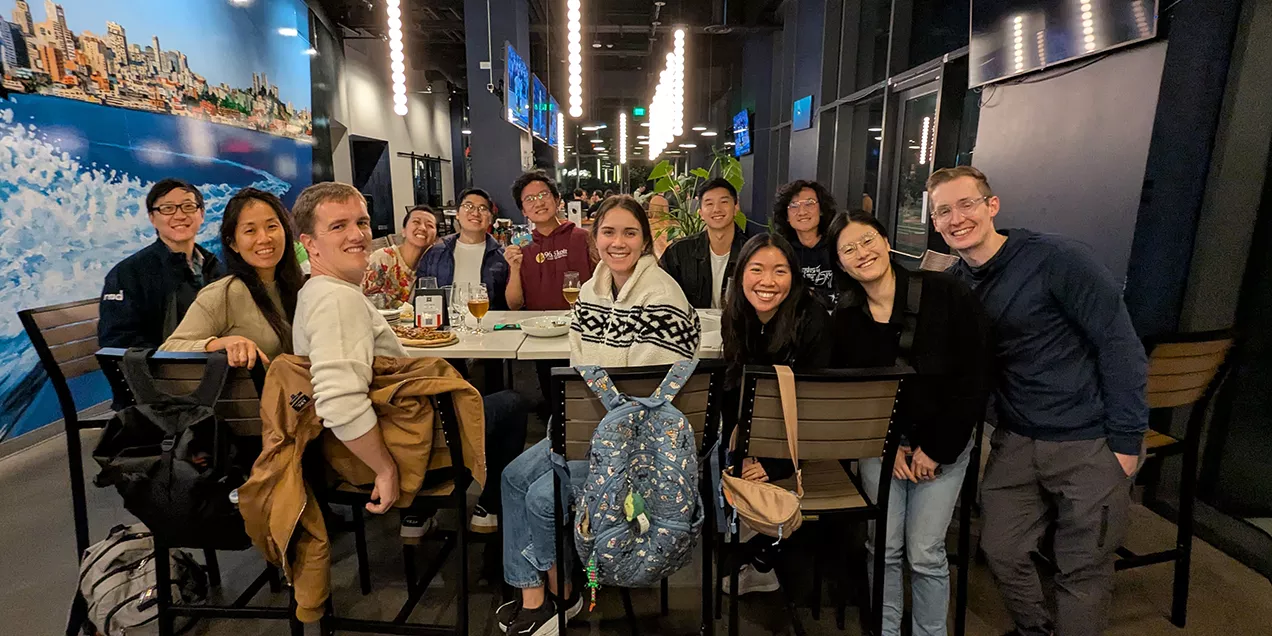
Wednesday night trivia, including Charlie Wang and Katie Cecil (former UCSF diagnostic radiology resident, chief resident, and breast imaging fellow).