
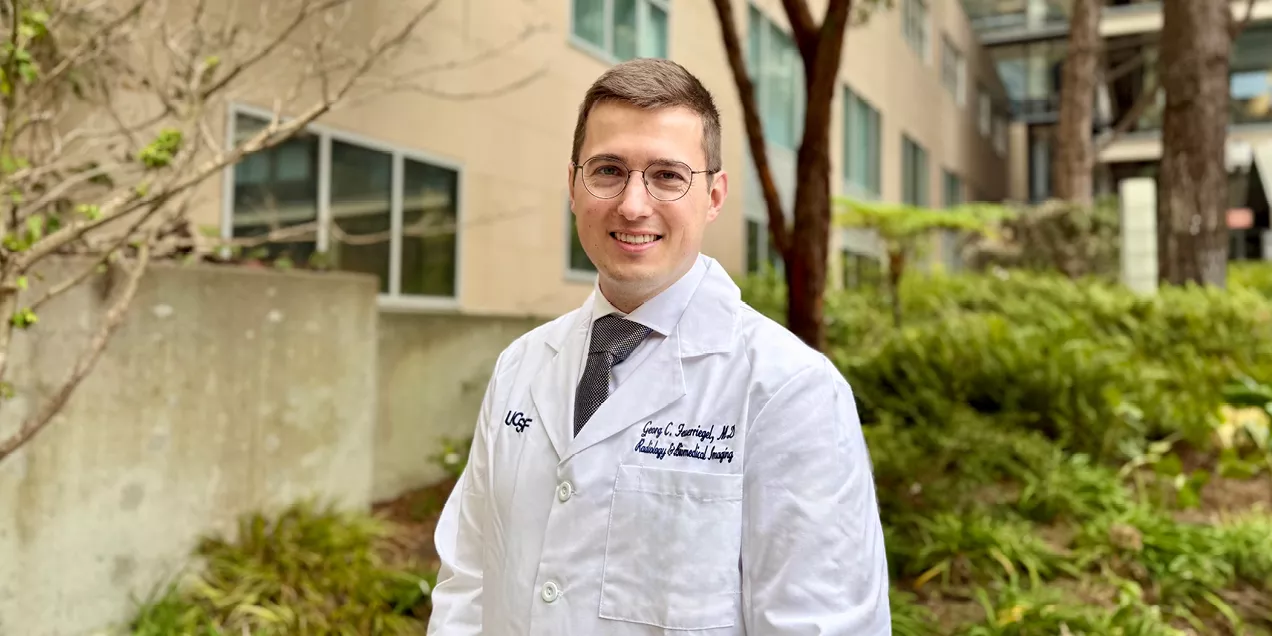
From Images to Answers: Spotlight on MSK Radiologist Georg Feuerriegel, MD
For Georg Feuerriegel, MD, radiology is where the perspectives of many specialties come together. As a musculoskeletal radiologist and physician-scientist at UCSF, he develops and assesses quantitative MRI biomarkers that give clinicians a shared, measurable basis for decisions. “Medicine is never a straight line, and there’s never only one answer to a question,” he observes. “So, you always need to have a plan for what to do in the next scenario, and a plan after that.”
In medical school at the Technical University of Munich (TUM), Feuerriegel's original plan was to be an orthopedic surgeon. His path changed when he met Thomas Link, MD, PhD, who offered him a musculoskeletal radiology research fellowship at UCSF.
That experience changed the course of Feuerriegel’s career. “Thomas was my first mentor and introduced me to the world of musculoskeletal imaging. From him, I learned the basic research tools I needed for my later career.”
After a clinical fellowship at the University of Zurich, Feuerriegel concurrently served as an assistant professor of radiology at the University Hospital rechts der Isar, TUM, and as a neuroradiology attending at the Ludwig-Maximilians-University Hospital Munich.
At TUM, Feuerriegel discovered his love of teaching. He helped adapt the teaching program from a traditional lecture-centric model to a participatory case-based format, which he found was more effective at developing clinical reasoning. When residents discussed what they saw in clinical images Feuerriegel observed that “The only wrong answer is if you don’t say anything.”
In diagnosis as in teaching, Feuerriegel considers communication to be one of a radiologist’s most valuable tools. Modern imaging can reveal an enormous amount of information. Radiologists must determine which findings matter most to the clinical question and communicate them clearly enough to guide the next decision.
Understanding the clinical history and establishing a dialogue with the referring provider allows a clinician to transform a sea of possibly relevant findings into a helpful roadmap for future action.
As a physician-scientist, Feuerriegel sees radiology and imaging science as connective disciplines. He says, "Radiology binds the perspectives of multiple medical experts together. Individual interpretation can change between doctors, but quantitative measurements give you a number and help you plan better treatment.”

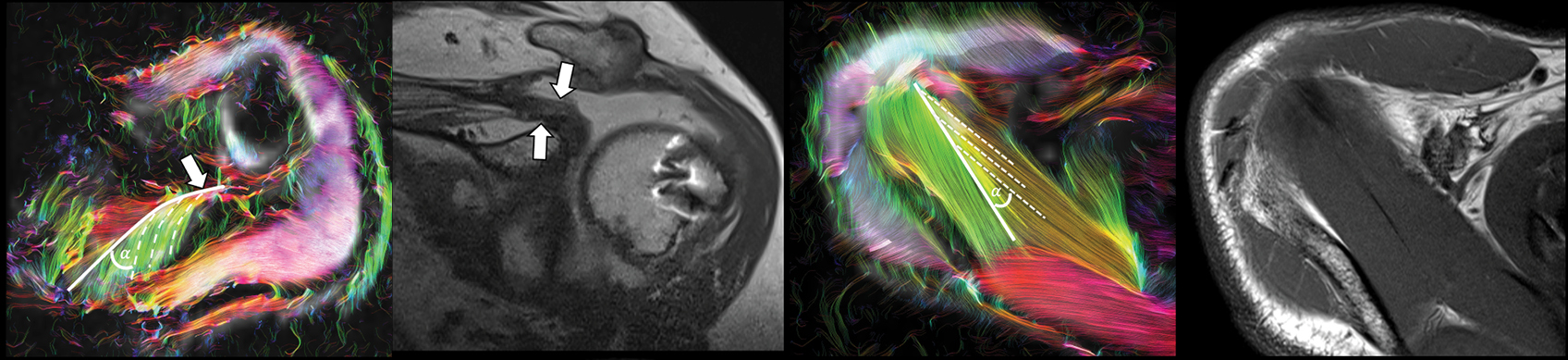
Feuerriegel takes these cross-disciplinary connections seriously. Much of his research is translational, aimed at moving novel techniques into clinical practice or dedicated to expanding options when the first imaging approach hits an obstacle. His work with CT-like MRI produces highly detailed images of bone without the ionizing radiation used in CT. Intrinsic tendon signal is difficult to capture with conventional MRI sequences, so he worked on ultrashort echo time imaging to monitor tendon health and degradation. His studies in accelerated MRI techniques for inflammatory knee conditions and ultra-high field 7T MRI for nerve compression in patients with cervical radiculopathy won awards from the Swiss Society of Musculoskeletal Radiology and the Swiss Society of Radiology in 2024.
Outside the lab and the reading room, Feuerriegel explores landscapes and seascapes. He rides his Harley-Davidson along Skyline Boulevard and farther afield, including Route 66 across the American Southwest. He is also an experienced freediver who enjoys spearfishing for lingcod and rockfish along the California coast.
As he maintains his collaborations with colleagues in Germany and Switzerland, Feuerriegel is energized by the wide-ranging opportunities in academic medicine at UCSF. “I need the mix,” he says. “I could not only do my clinical work. I could not only do research or only teach. All the components make my day exciting.”