

A Warm Welcome to New Faculty in Neuroradiology and Molecular Imaging & Therapeutics
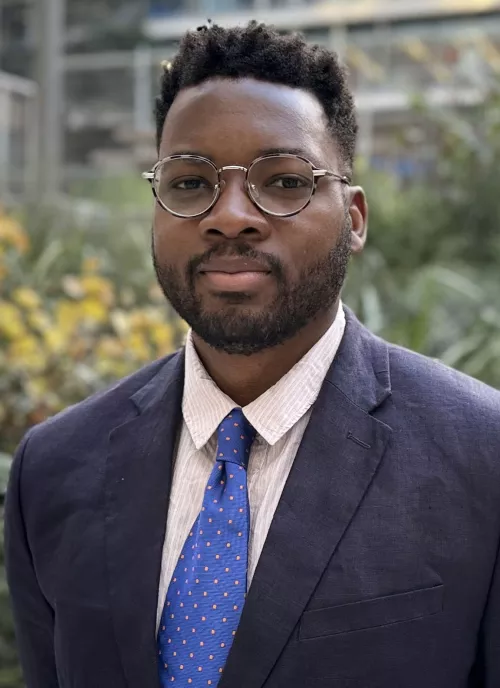
Rahman Akinlusi, MD, is Assistant Professor of Clinical Radiology in Molecular Imaging & Therapeutics. He earned his medical degree in 2020 from the American University of the Caribbean School of Medicine, completed his nuclear medicine residency in 2024 while serving as chief resident, followed by an imaging informatics fellowship in 2025 at the Icahn School of Medicine at Mount Sinai Hospital.
Dr. Akinlusi's research interests center on advancing nuclear medicine through theranostics, quantitative image analysis, and the integration of artificial intelligence for improved diagnostic and therapeutic outcomes. He is focused on applying machine learning, deep learning, and computer-aided detection systems to enhance tumor response assessment, lesion characterization, and radiation dose optimization.
His work also explores imaging informatics, including secure data exchange, cloud-based clinical trial solutions, and federated learning to promote precision medicine and equitable access to advanced imaging technologies.
A former high school science teacher, Dr. Akinlusi is dedicated to mentorship, simulation-based learning, and curriculum development that encourages diversity and patient education in nuclear medicine.
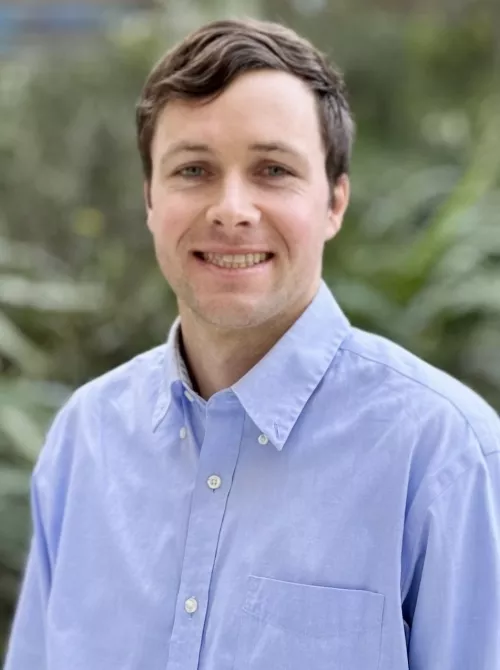
Emil Barkovich, MD, is Assistant Professor of Clinical Radiology in Neuroradiology. He earned his medical degree from George Washington University in Washington, DC, followed by an internship at West Virginia University in Morgantown. He completed his radiology residency at George Washington University Hospital, where he served as chief resident, and a two-year neuroradiology fellowship at Massachusetts General Hospital in 2025, where he served as chief fellow.
Dr. Barkovich has experience in head and neck and pediatric neuroimaging. He is an active educator and has mentored numerous medical students, residents, and fellows.
His research interests are varied and include ultra-high field 7 Tesla MRI, case reports of rare genetic diseases, and quality improvement projects focusing on imaging stewardship. He is also interested in evidence-based management guidelines for incidental findings on neuroimaging.
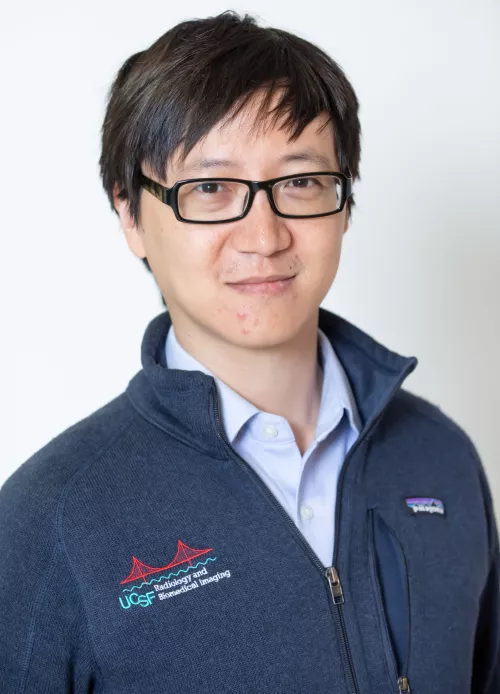
Charlie Wang, MD, PhD, joined the department as Assistant Professor in Residence in Neuroradiology. He earned his medical degree and a PhD in biomedical engineering from Case Western Reserve University, where his doctoral research focused on high-energy phosphate metabolism measurement by Phosphorus-31 MR Fingerprinting. He completed an internal medicine internship at the MetroHealth Medical Center, followed by a diagnostic radiology residency and neuroradiology fellowship at UCSF.
Dr. Wang's research focuses on developing novel quantitative physiological contrast mechanisms for MRI to advance diagnostic capabilities and bridge the gap between engineering and clinical practice. During his PhD, he developed a method for enhanced quantitative measurement of ATP metabolism that has since been adapted for clinical use.
At UCSF, he is a member of the Hyperpolarized MRI group, where his work on pyruvate-to-lactate metabolism imaging has yielded a significant improvement in spatial resolution.
His work to expand MRI accessibility includes a UCSF collaboration utilizing a low-field 0.55T system for patients with claustrophobia or implanted hardware. Dr. Wang has secured several grants, including an NIH F30 award, and has presented at the American Society of Neuroradiology (ASNR) and the International Society for Magnetic Resonance in Medicine (ISMRM).
Please join us in welcoming these new faculty members to UCSF!